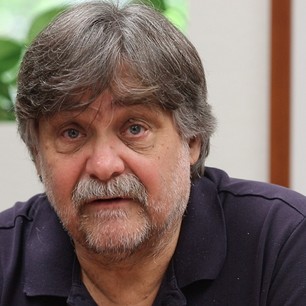
Chas' research goals include searching for planets and evidence for planets such as debris disks around nearby young stars. Additionally, he is interested in understanding the formation and evolution of distant infrared-bright galaxies and their relationship to the Cosmic Infrared Background.
Click here to see a list of Chas' publications.
Bruce works on two types of science projects: (1) investigation of the application of information technology to astronomical data processing; and (2) discovery of brown dwarfs through archival research, especially through cross-matching large catalogs.
Click here to see a list of Bruce's publications.
Jessie is primarily involved in the detection and characterisation of transiting exoplanets. She has worked on the Vulcan South, UNSW, NASA EPOXI and most recently NASA Kepler projects, and will begin working on the NASA JWST mission, modelling observations of transiting exoplanets with NIRCam.
Click here to see a list of Jessie's publications.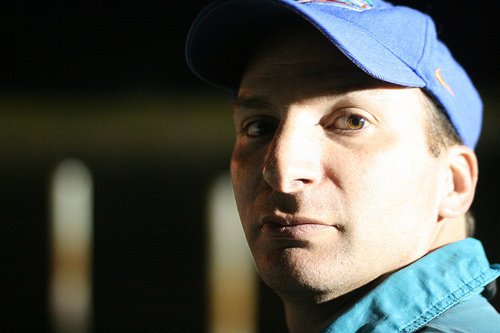
David has a long standing interest in study of exoplanets, young stellar objects and star formation. He is a member of the CoRoT and Kepler Follow-up observing teams. Working with his collaborators, he is working to understand the evolution and formation of exoplanets around young stars.
Click here to see a list of David's publications.
Catherine is interested in multi-star systems, low-mass and exoplanet-hosting stars, and astronomical instrumentation. She uses a variety of ground-based, high-resolution instrumentation in the optical and near-infrared to image and characterize these systems. She seeks to understand how the planets of single- and multi-star systems differ in their formation and evolution with time.
Click here to see a list of Catherine's publications.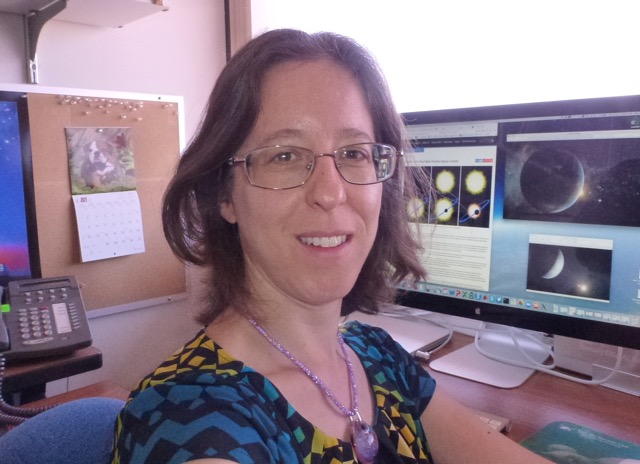
Elise's research focuses on young stars, how they and their protoplanetary disks form and evolve in young star-forming regions, and more recently on the host stars of exoplanets, in particular their multiplicity and how it changes the derived planet properties. She is using mainly infrared data from a variety of ground- and space-based observatories.
Click here to see a list of Elise's publications.
Emily's research focuses on the detection and characterization of planets around M-dwarf stars. She is interested in stellar activity and how it may affect our ability to study planets around low mass stars. She works with observational datasets from a variety of different ground- and space-based facilities and is the Associate Project Scientist for the Pandora mission.
Click here to see a list of Emily's publications.

Kevin's research encompasses different aspects of exoplanet detection and characterization to gain a better understanding of exoplanet demographics. He uses spectroscopic, photometric, and astrometric data to build large and uniform stellar catalogs that form the basis of several exoplanet demographics studies with Kepler, K2, and TESS. He is particularly interested in M dwarfs, which are promising targets to study Earth-sized planets and search for biosignatures with upcoming extremely large telescopes in the next decade.
Click here to see a list of Kevin's publications.

Aurora studies exoplanet atmospheres primarily using transmission and emission spectroscopy, specializing in observations performed at high-spectral resolution. She aims to use the resulting observations to study the diversity of planetary systems and learn how they form and evolve over time.
Click here to see a list of Aurora's publications.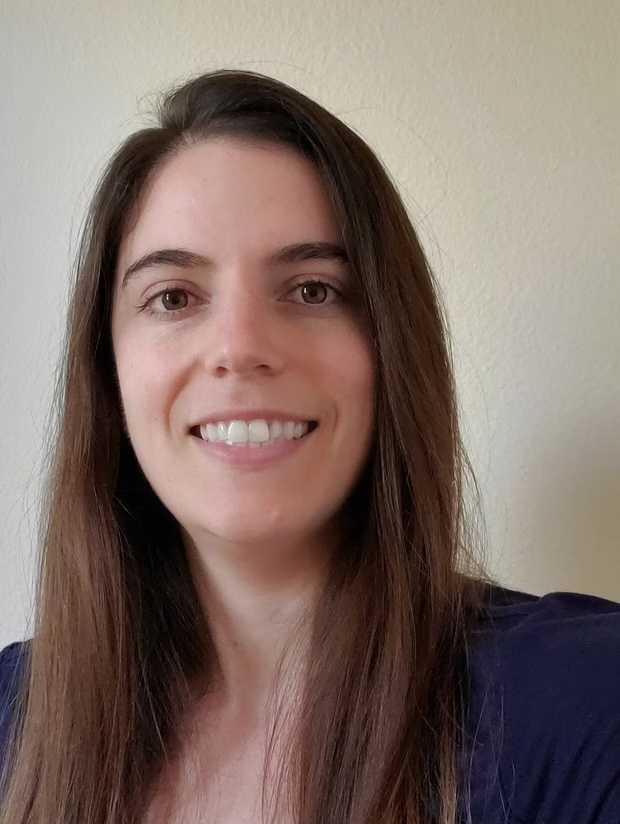
Tiffany's research focuses on the direct imaging of extrasolar planets, with the goal of understanding the formation and evolution of giant exoplanets around stars with debris disks. She uses high-contrast imaging observations to search for and characterize faint planetary companions and develops advanced image-processing techniques to enhance planet detectability. Her work combines data from both ground-based telescopes and space-based observatories to study planetary systems beyond the Solar System.
Click here to see a list of Tiffany's publications.
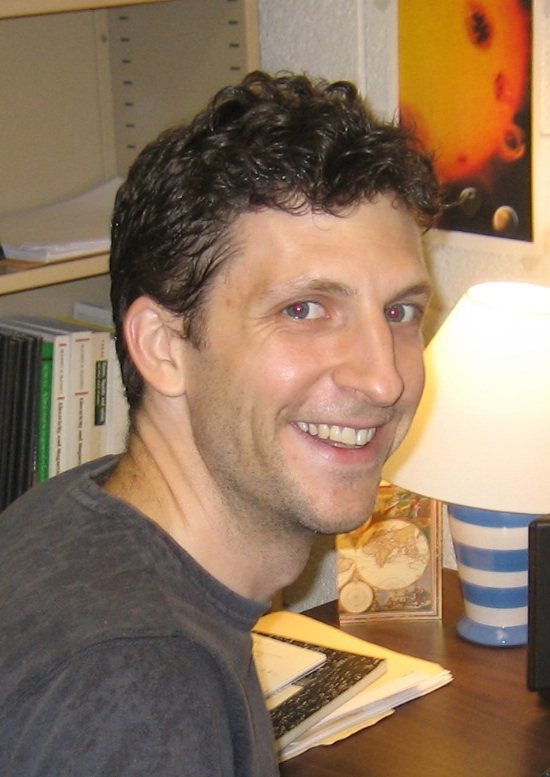
Julian's research is primarily in exoplanet detection and characterization, currently with a particular focus on young planets and what they can tell us about how planets form and evolve. He has a background in instrumentation development and data characterization, and is closely involved with the ARCONS (Array Camera for Optical to Near-IR Spectrophotometry) team at UCSB, who are working on super-conducting MKID detector array technology for time- and energy-resolved photon imaging. He worked extensively on high-resolution spectrograph development with the NRES team at LCOGT, and previously worked on development the novel Dispersed Fixed-Delay Interferometry technique for radial velocity detection.
Click here to see a list of Julian's publications.(last updated December 19th, 2025 11:27:03)


The NASA Exoplanet Science Institute is operated by the California Institute of Technology, under contract with the National Aeronautics and Space Administration under the Exoplanet Exploration Program.